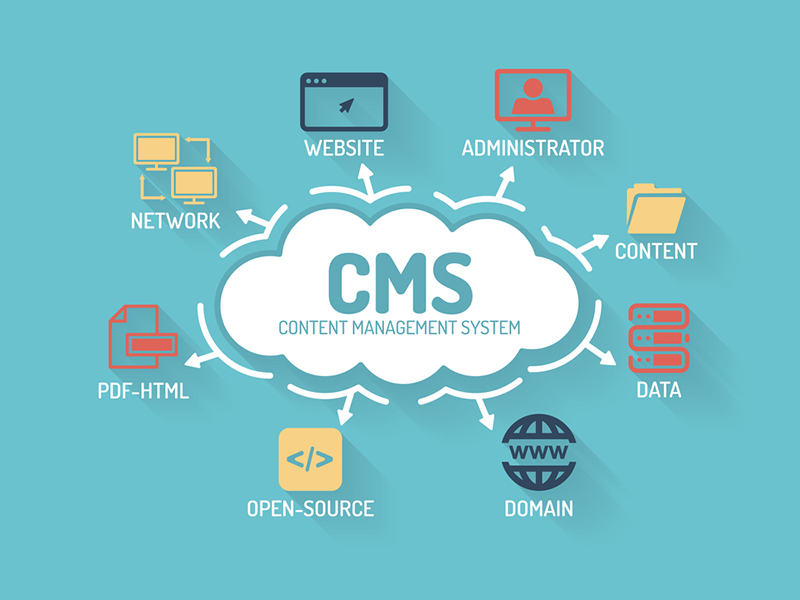
 In today’s digital-first business landscape, enterprise organizations need more than just an attractive website. They require scalable systems, secure infrastructures, flexible integrations, and platforms that can support long-term growth. This is where the debate between a custom CMS and WordPress becomes highly relevant.
Many enterprises start with WordPress because of its accessibility and lower upfront costs. However, as operations expand, businesses often face limitations related to performance, customization, security, and scalability. On the other hand, organizations investing in custom cms development services gain tailored solutions built specifically for their workflows, users, and long-term business objectives.
So, which option truly scales better for enterprise businesses?
In this guide, we’ll compare custom CMS solutions and WordPress across multiple areas including scalability, security, performance, flexibility, maintenance, integrations, and cost efficiency to help enterprises make the right decision.
Understanding WordPress and Custom CMS Platforms
Before diving into comparisons, it’s important to understand what each solution offers.
What is WordPress?
WordPress is the world’s most widely used content management system. It powers millions of websites because of its ease of use, plugin ecosystem, and affordability.
WordPress works exceptionally well for:
- Small to medium-sized businesses
- Blogs and publishing websites
- Marketing-focused websites
- Basic eCommerce stores
- Companies with limited technical requirements
Its open-source nature allows developers to customize themes and functionality using plugins and extensions.
What is a Custom CMS?
A custom CMS is a fully tailored content management platform developed specifically for a business’s operational requirements. Unlike WordPress, which follows a generalized architecture, a custom CMS is designed around unique business goals, workflows, and scalability needs.
Companies offering custom enterprise software development services often build custom CMS platforms for enterprises that require:
- Advanced workflow automation
- High-performance infrastructure
- Enterprise-grade security
- Custom dashboards
- Multi-location management
- ERP or CRM integrations
- Industry-specific functionalities
A custom CMS gives organizations complete control over architecture, features, APIs, and user experiences.
Why Scalability Matters for Enterprise Businesses
Scalability is one of the most critical factors for enterprise digital systems.
A scalable CMS can:
- Handle increasing traffic volumes
- Support large databases
- Manage multiple user roles
- Integrate with enterprise tools
- Maintain fast performance under heavy loads
- Expand without rebuilding infrastructure
Enterprise businesses often operate across regions, departments, and customer segments. Their platforms must evolve continuously without sacrificing performance or security.
This is where the gap between WordPress and custom CMS solutions becomes more visible.
1. Performance and Speed
WordPress Performance Challenges
WordPress can perform well initially, but enterprise growth introduces several bottlenecks:
- Heavy reliance on plugins
- Bloated themes
- Shared hosting limitations
- Database inefficiencies
- Increased server requests
As businesses add more features, plugins, and traffic, WordPress websites often become slower and harder to optimize.
For enterprises handling thousands of daily users, performance issues can directly impact:
- User experience
- Conversion rates
- SEO rankings
- Revenue generation
Custom CMS Performance Advantages
With custom cms development services, developers build systems optimized specifically for enterprise workloads.
Custom CMS platforms allow businesses to:
- Use lightweight architectures
- Optimize database structures
- Implement custom caching strategies
- Use scalable cloud infrastructure
- Reduce unnecessary code dependencies
Because every feature is purpose-built, the platform remains clean, efficient, and high-performing.
For enterprises expecting rapid growth, custom CMS solutions generally outperform WordPress in long-term scalability.
2. Security and Compliance
Security Risks in WordPress
Because WordPress powers such a large percentage of websites globally, it is a common target for cyberattacks.
Security vulnerabilities often arise from:
- Outdated plugins
- Third-party themes
- Weak admin practices
- Plugin conflicts
- Open-source exploit visibility
Enterprise organizations handling sensitive customer data, financial transactions, or healthcare information may face compliance risks when relying heavily on plugin-based ecosystems.
Enterprise Security with Custom CMS
Custom-built systems provide significantly stronger security control.
With custom enterprise software development services, businesses can implement:
- Custom authentication systems
- Advanced encryption protocols
- Role-based access management
- Private APIs
- Enterprise-grade firewalls
- Secure server architecture
Since the platform is uniquely developed, attackers cannot rely on publicly known vulnerabilities commonly associated with WordPress ecosystems.
This makes custom CMS platforms ideal for industries like:
- Finance
- Healthcare
- Government
- Logistics
- Enterprise SaaS
- Manufacturing
3. Flexibility and Customization
WordPress Flexibility Limitations
WordPress offers flexibility through plugins and themes, but enterprises eventually encounter limitations.
Common challenges include:
- Plugin incompatibility
- Design restrictions
- Difficult custom workflows
- Dependency on third-party tools
- Performance degradation from added functionality
While developers can customize WordPress extensively, complex enterprise requirements often require workaround solutions that become difficult to maintain over time.
Custom CMS Delivers Full Control
Custom CMS platforms are built entirely around business operations.
This means enterprises can create:
- Unique admin panels
- Industry-specific workflows
- Advanced reporting systems
- Multi-language infrastructures
- Role-based publishing systems
- Tailored customer experiences
Every feature is intentionally designed for the organization instead of adapting generic tools.
This level of customization is one of the biggest reasons enterprises invest in custom cms development services.
4. Third-Party Integrations
WordPress Integration Challenges
WordPress supports thousands of plugins and integrations, but enterprise systems often require deeper connectivity with:
- ERP systems
- CRM software
- Inventory management
- Payment gateways
- HR systems
- Business intelligence tools
Plugin-based integrations may introduce:
- Security vulnerabilities
- API limitations
- Slow synchronization
- Maintenance complications
Custom CMS Integration Advantages
Custom CMS solutions are built with integration scalability in mind.
Using APIs and tailored backend architectures, enterprises can seamlessly connect their CMS with existing ecosystems.
A custom CMS can integrate with:
- SAP
- Salesforce
- Microsoft Dynamics
- Oracle systems
- Custom internal platforms
- Cloud-based enterprise applications
This creates centralized operations and improves organizational efficiency.
5. Content Management Efficiency
WordPress Content Management
WordPress excels in simple content publishing.
Its user-friendly interface makes it easy for non-technical teams to:
- Publish blog posts
- Manage pages
- Upload media
- Optimize SEO content
For content-heavy businesses, this simplicity is highly beneficial.
However, enterprise organizations often require advanced workflow management, approval chains, permissions, and departmental publishing structures.
Custom CMS Workflow Optimization
Custom CMS platforms can be designed around internal business processes.
This allows enterprises to implement:
- Multi-stage approval systems
- Department-specific permissions
- Automated publishing workflows
- AI-assisted content management
- Enterprise analytics dashboards
Instead of forcing teams to adapt to WordPress limitations, the CMS adapts to the organization.
6. Long-Term Maintenance and Ownership
WordPress Maintenance Concerns
WordPress requires ongoing updates for:
- Core software
- Plugins
- Themes
- Security patches
As websites become more complex, maintenance becomes increasingly time-consuming.
Plugin conflicts and compatibility issues can create operational disruptions, especially after updates.
Enterprises may also become dependent on third-party plugin developers for mission-critical features.
Custom CMS Ownership Benefits
Custom platforms provide complete ownership and control.
Businesses are not dependent on external plugin ecosystems or marketplace updates.
With professional custom enterprise software development services, enterprises receive:
- Dedicated support
- Custom documentation
- Controlled feature rollouts
- Tailored maintenance strategies
- Long-term scalability planning
This creates a more stable and predictable digital infrastructure.
7. SEO and Digital Growth
WordPress SEO Strengths
WordPress is highly SEO-friendly, especially with plugins like Yoast SEO and Rank Math.
It offers:
- Easy metadata management
- XML sitemaps
- Blogging capabilities
- SEO optimization plugins
For many businesses, WordPress provides excellent baseline SEO functionality.
Custom CMS SEO Potential
Custom CMS platforms can achieve even greater SEO performance because developers can optimize:
- Site architecture
- Core Web Vitals
- Structured data
- Dynamic rendering
- Server-side optimization
- URL structures
Since the platform is custom-built, technical SEO improvements can be deeply integrated into the architecture itself.
This becomes especially important for enterprise websites managing thousands of indexed pages.
Cost Comparison: WordPress vs Custom CMS
WordPress Costs
WordPress usually has lower upfront costs because:
- Themes are inexpensive
- Plugins are widely available
- Development is faster initially
However, long-term enterprise costs may increase due to:
- Plugin licensing
- Security management
- Performance optimization
- Frequent maintenance
- Scalability limitations
Custom CMS Investment
Custom CMS development requires higher initial investment.
However, enterprises often benefit from:
- Reduced long-term operational issues
- Better performance
- Improved security
- Lower dependency risks
- Greater scalability
For growing organizations, the ROI often becomes stronger over time.
Which Businesses Should Choose WordPress?
WordPress is still a strong choice for businesses that:
- Need fast deployment
- Operate with smaller budgets
- Focus heavily on content marketing
- Have limited technical complexity
- Manage moderate traffic levels
It remains one of the most efficient platforms for startups and mid-sized businesses.
Which Businesses Should Choose a Custom CMS?
A custom CMS is ideal for enterprises that require:
- Advanced scalability
- Enterprise-grade security
- Custom workflows
- Large-scale integrations
- High traffic performance
- Long-term digital infrastructure
Organizations seeking complete control over their technology ecosystem often benefit more from custom cms development services than from relying on generic CMS platforms.
Final Verdict
When comparing WordPress and custom CMS solutions for enterprise scalability, the answer largely depends on business complexity, growth expectations, and operational requirements.
WordPress is an excellent platform for businesses needing quick deployment, strong content management, and lower initial costs. However, as enterprise requirements become more advanced, its plugin-dependent architecture can introduce scalability, security, and maintenance challenges.
A custom CMS, on the other hand, offers unmatched flexibility, performance optimization, security control, and enterprise integration capabilities. While the initial investment is higher, businesses gain a scalable infrastructure tailored specifically to their long-term goals.
For enterprises focused on sustainable digital growth, operational efficiency, and complete platform ownership, investing in custom enterprise software development services and specialized custom cms development services often proves to be the more scalable and future-ready solution.